
Is Your Child Thriving or Just Masking? Understanding Autistic Burnout
Is Your Child Thriving or Just Masking? Understanding Autistic Burnout
June 24, 2026
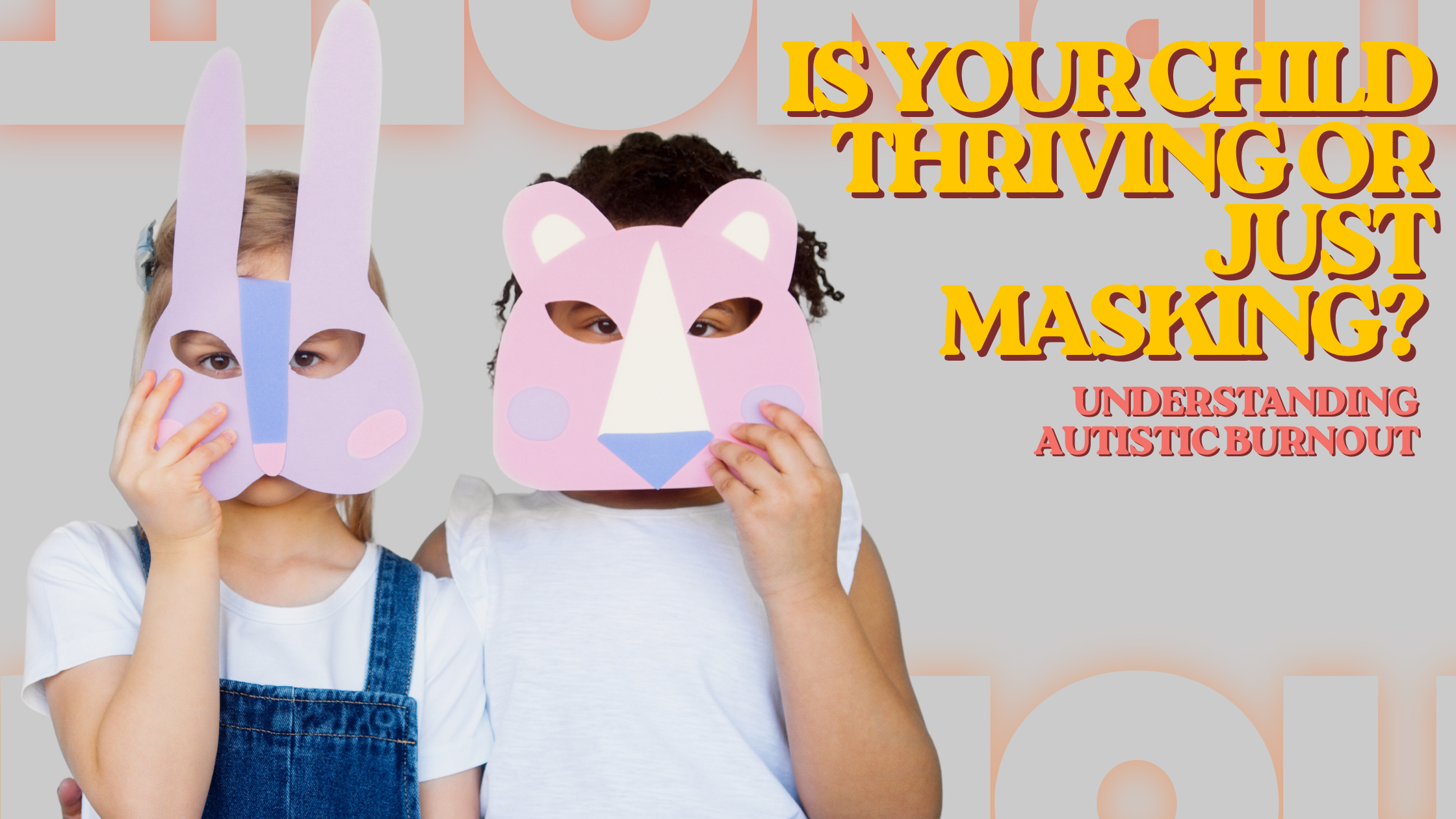
1. What is “Masking” (and What is “Masking Debt”)?
Masking, also known as camouflaging, is the conscious or unconscious suppression of natural autistic traits to appear neurotypical or “blend in” with societal expectations.
Historically, older models of therapy and education unintentionally taught children to mask by rewarding them for:
- Forcing eye contact even when it was physically uncomfortable.
- Having “quiet hands” instead of allowing harmless stimming (like hand-flapping).
- Enduring overwhelming sensory environments without complaint.
While a masked child might look highly “compliant” in a classroom, the neurological effort required to maintain that mask is exhausting. Over time, this constant suppression builds up what researchers call “Masking Debt,” which eventually leads to a complete physical and emotional collapse.
2. Spotting the Signs of Autistic Burnout
Autistic burnout is not just ordinary tiredness; it is a profound loss of energy and skills due to chronic systemic overload. If your child is masking heavily at school, they may experience burnout when they get home.
Signs your child might be experiencing burnout:
- The “After-School Collapse”: They hold it together perfectly all day, but experience severe meltdowns the second they get into your car.
- Loss of Skills: A sudden regression in abilities they previously mastered, such as a loss of speech or a sudden inability to complete basic daily routines.
- Increased Sensory Sensitivity: Things that used to mildly bother them (like the seam of a sock or the hum of the refrigerator) now cause physical pain or extreme distress.
- Intense Lethargy: An inability to engage in even their most preferred activities or special interests.
3. The Modern ABA Difference: Assent-Based Care
Many parents hesitate to start ABA because they fear the therapist will try to “normalize” their child. At ABA Solutions, we reject the compliance-based models of the past. Our therapy is strictly neurodiversity-affirming and assent-based.
What does that look like in practice?
- We do not target eye contact. If a child can listen and communicate better while looking at the floor, we respect their bodily autonomy.
- We encourage self-regulation (Stimming). Stimming is a valid and necessary tool for emotional regulation. Unless a behavior is physically harmful to the child or others, we do not try to stop or “extinguish” it.
- We prioritize “Assent.” Therapy is done with your child, not to them. If a child withdraws, says no, or shows signs of distress, our therapists immediately back away and adjust the environment.
4. How the Clinical Process Works (Without Forcing Compliance)
When a clinic submits a treatment plan for insurance review, the goal is to prove “medical necessity.” Insurance reviewers are looking for goals that improve the child’s functional quality of life and safety.
To get a treatment plan approved, we do not need to write goals about acting neurotypical. Instead, modern ABA providers structure their clinical goals around self-advocacy and functional independence:
- Instead of: “The child will sit at the table for 10 minutes without fidgeting.”
- We write: “The child will independently use their AAC device to request a sensory break when overwhelmed.”
- Instead of: “The child will tolerate loud noises in the grocery store.”
- We write: “The child will successfully retrieve and wear their noise-canceling headphones before entering a high-stimulus environment.”
By focusing on communication and self-regulation, we help your child navigate the world safely without asking them to hide their neurodivergence.
🎒 YOUR HOME ACTION PLAN
If you suspect your child is masking or entering burnout, the answer is not to push harder. The answer is to reduce the demands.
- Audit their Schedule: Strip away non-essential demands (like rigid evening chores) to allow their nervous system to rest.
- Create a “Low-Demand Zone”: Designate a dark, quiet space in your home where no questions are asked and no demands are placed.
- Validate their Neurotype: Openly discuss that their brain works differently, and assure them that it is entirely okay to flap, rock, and avoid eye contact in your home.